
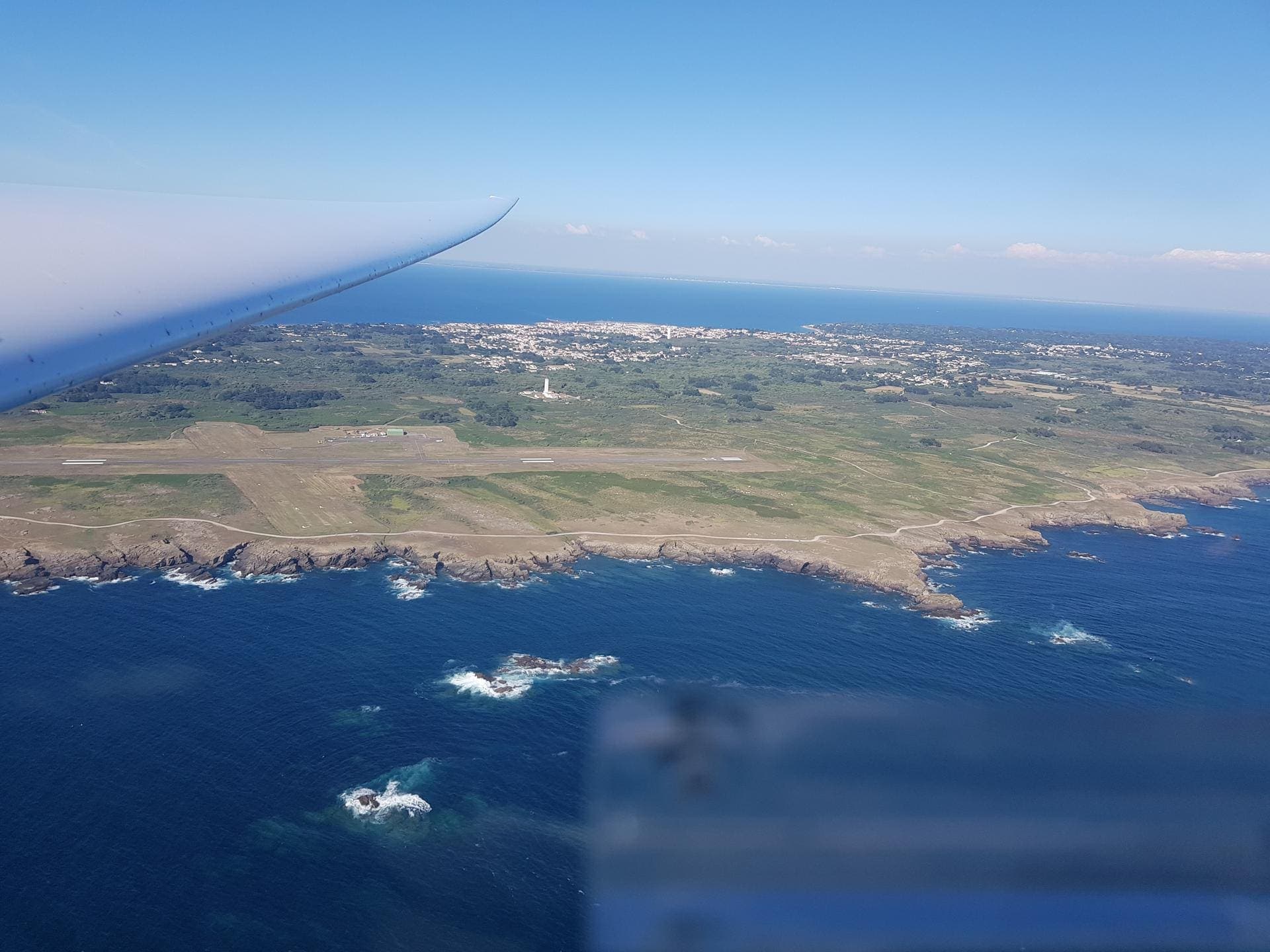
11 June 2021 · Yves Gerster
A Glider, a Beach and 720 Kilometres
A map of Europe above the desk, a spontaneous Airbnb booking — and the next evening, flip-flops on the beach of Île-d'Yeu in the Atlantic. A gliding safari with a difference.
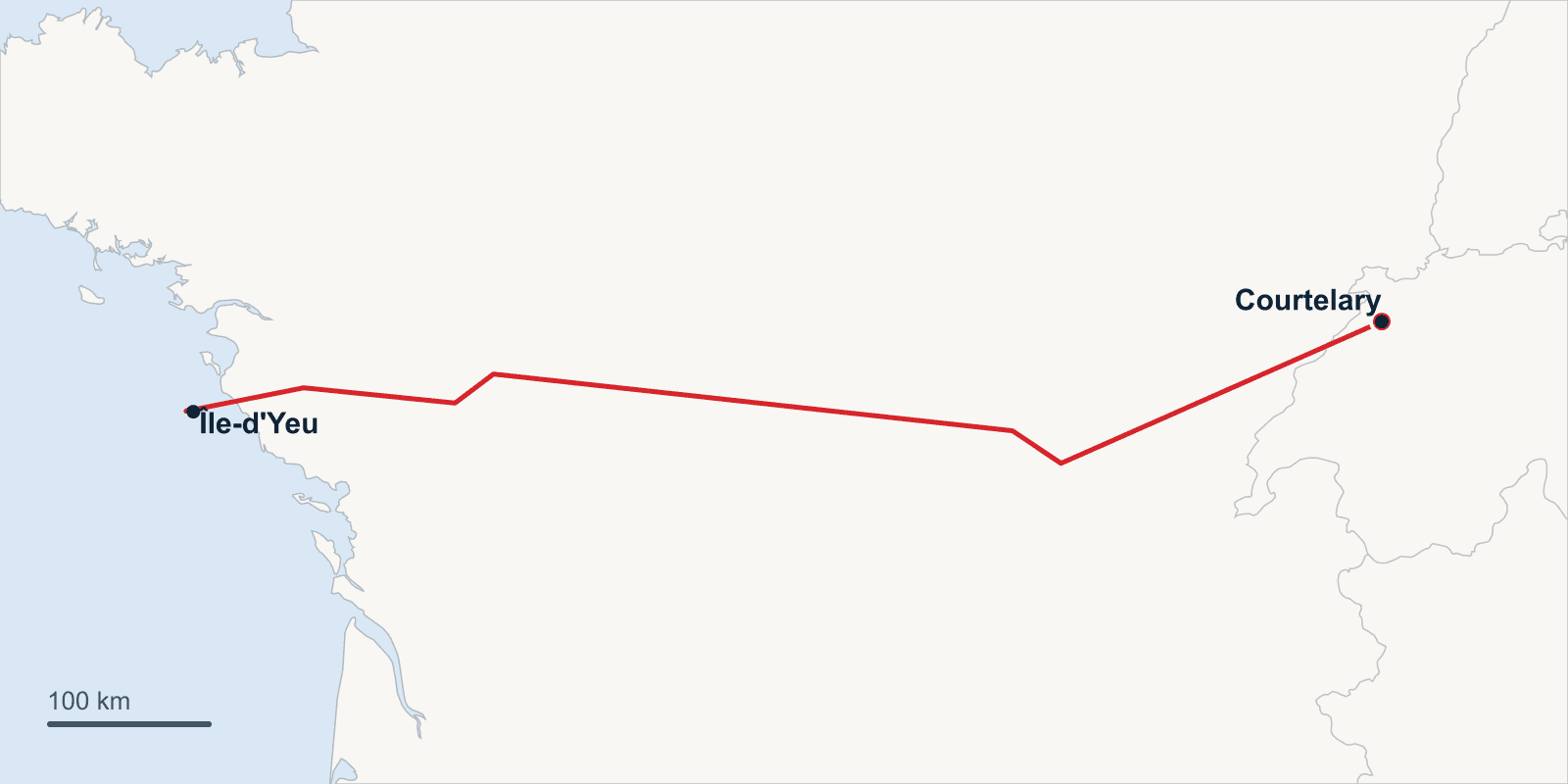
- 762 km
- Distance
- 8 h 32 min
- Airborne
- Courtelary → Île-d'Yeu
- Route
- DG-400 17 m
- Glider
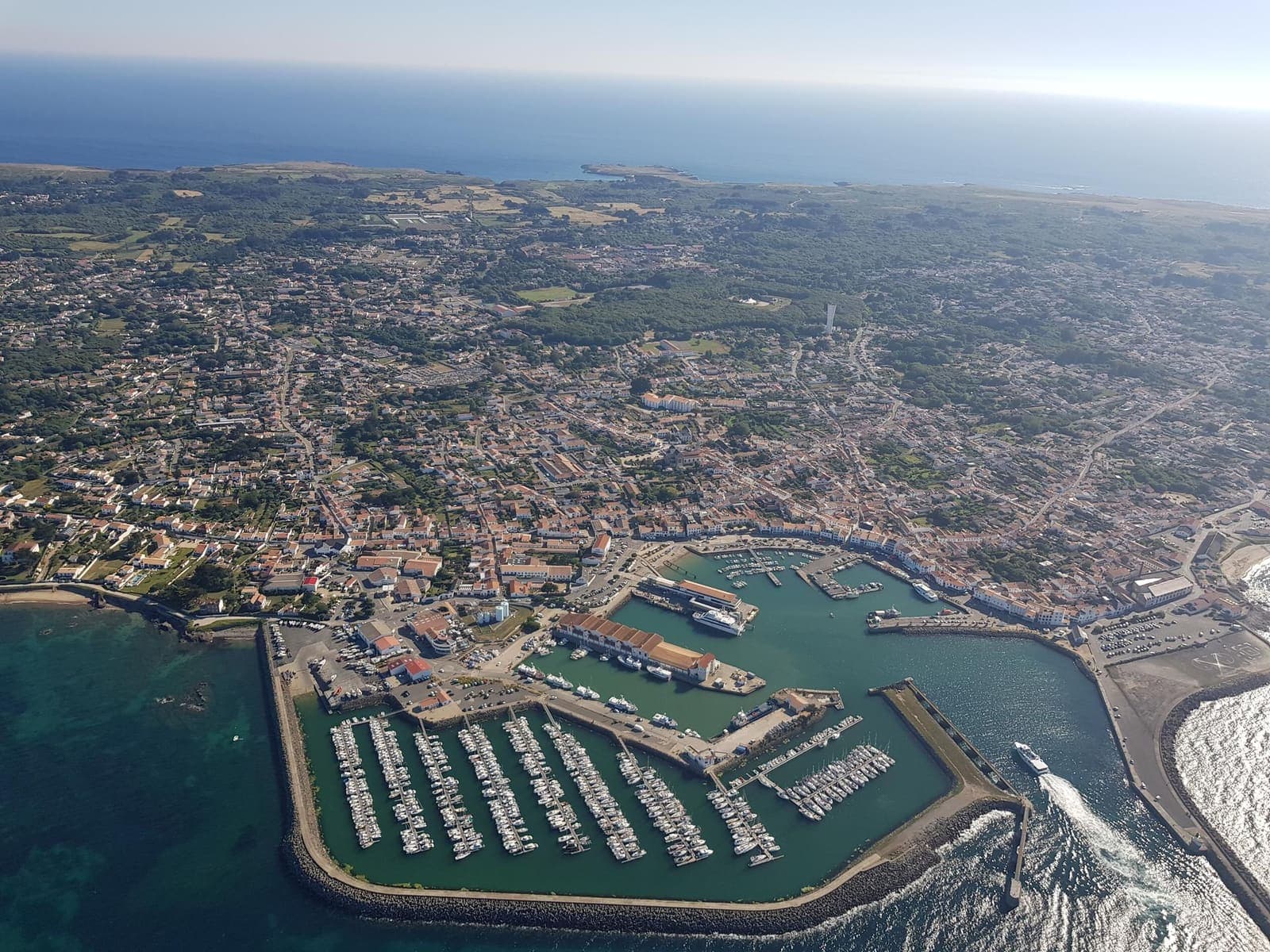
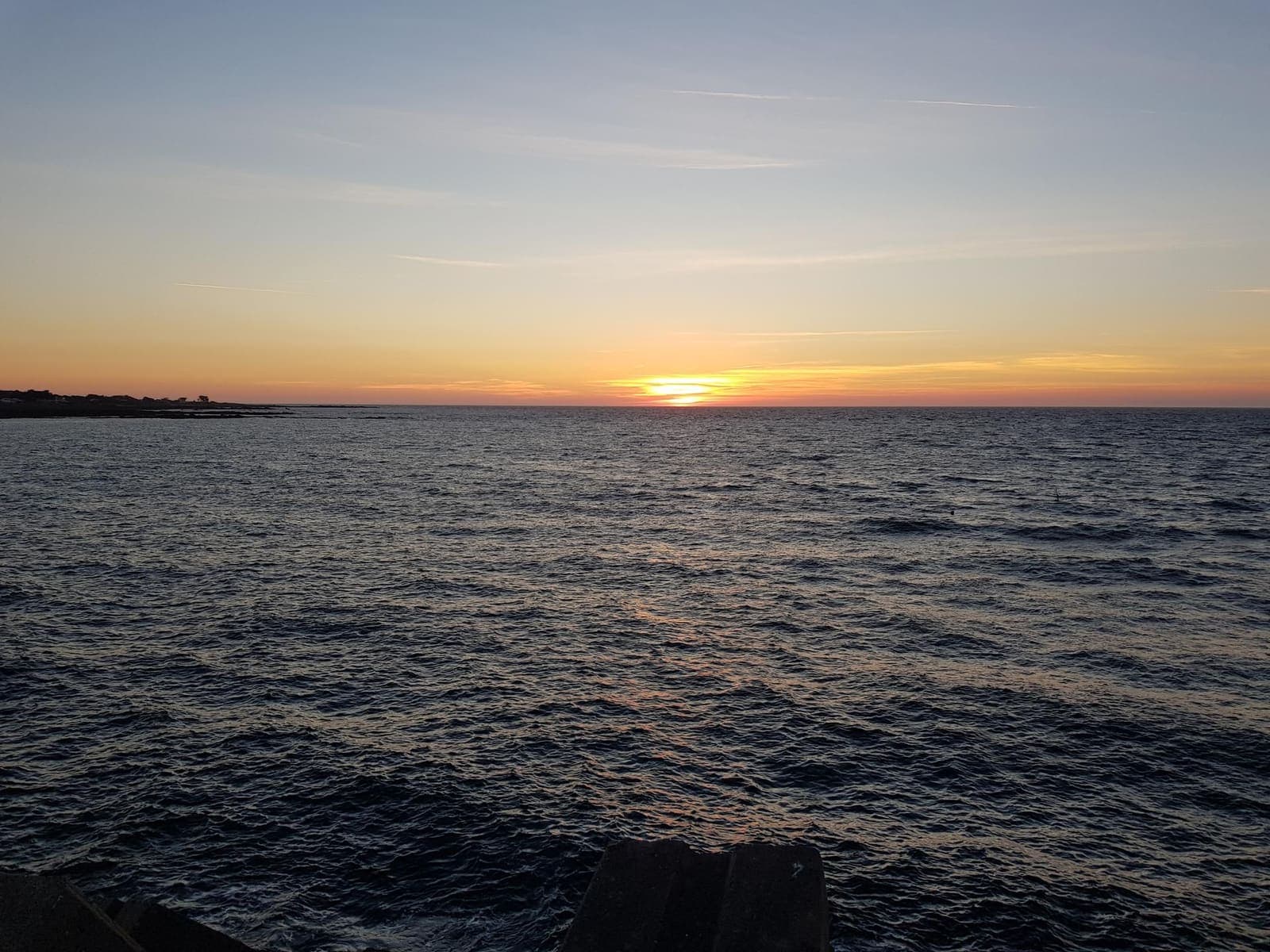
Rarely have I been as happy after a flight as on this Friday evening: I am sitting on the beach of Île-d'Yeu in the Atlantic, 720 km from my home airfield as the crow flies — with the glider tied down at the island's little airport.
The view from the home office
The story begins the evening before. I have been at my desk all day while beautiful cumulus glow outside in the evening sun. My eyes wander to the map of Europe that hangs — admittedly somewhat distractingly — above my screen. Subconsciously the decision has long been made: I have to fly somewhere. The screen fills with weather models. Friday looks good almost everywhere, Saturday will do for the way back. It is going to be a two-day gliding safari — and the destination obviously has to be somewhere you can swim.
An island in the Atlantic
On Google Maps I scan the French west coast for airfields. Out of pure curiosity I zoom in on a small island: Île-d'Yeu, 20 km off the coast, with its own airfield. I know immediately: that is where I want to go. The only restriction in the directory: "French only" on the radio. Luckily, I can.
At 8 pm I look for somewhere to stay. The hotels are full, but on Airbnb I find a pretty room. I can hardly believe it: I have just paid 60 euros for a room on an island 720 km from Courtelary. Dig out the approach charts, file the flight plan — ready to go.
Oxygen out, flip-flops in
Friday morning, just before eight, I rig the DG-400 — the loyal companion of many crazy projects, which has had a little too little attention lately next to the JS1. Packing is quick: oxygen out, flip-flops and swimming trunks in. There is no fuel on the island, so I take an aerotow to land with a full tank — the reserve for the way home.
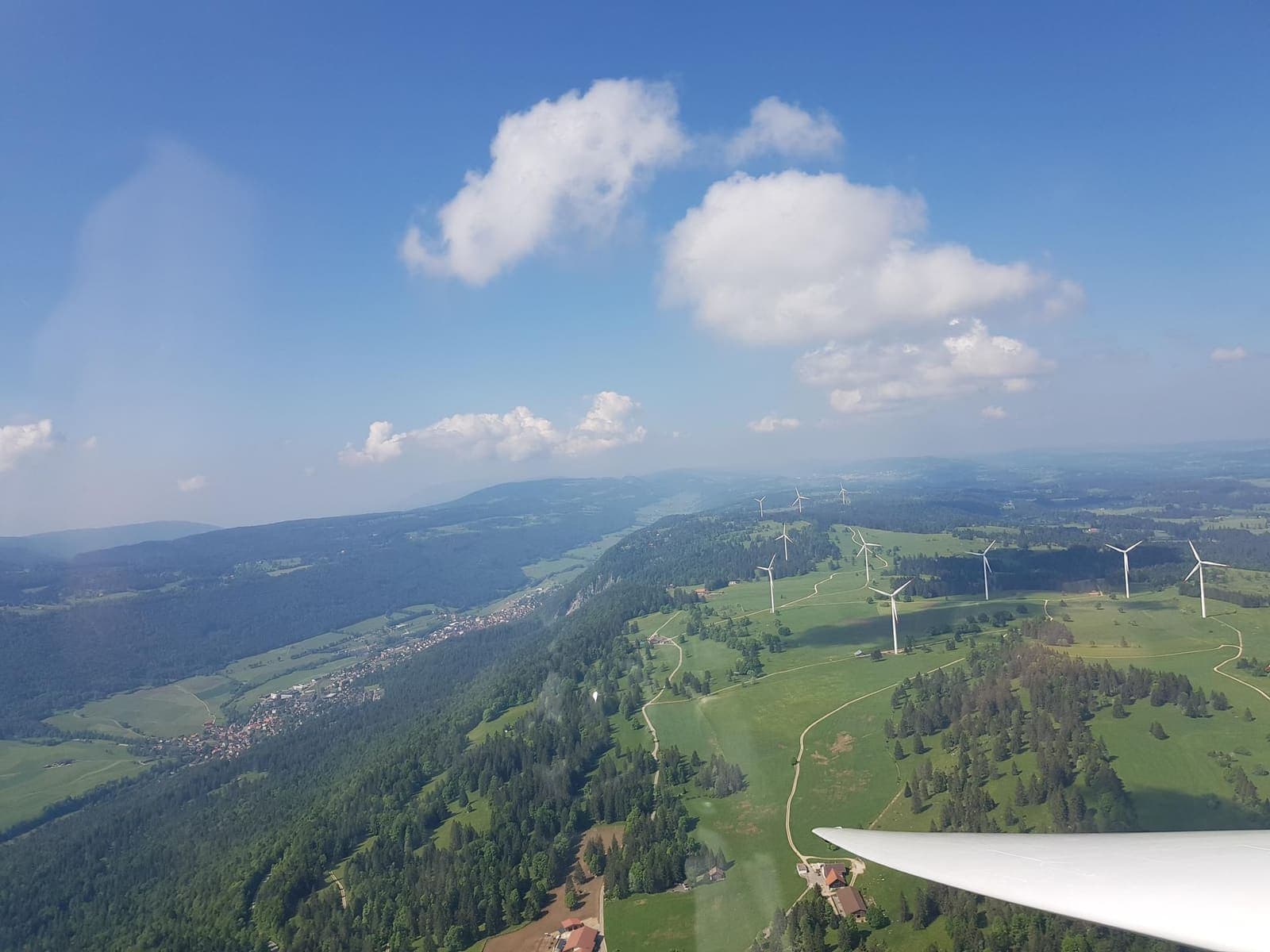
The Jura works as well as expected. After an hour I have to leave the pretty clouds behind and glide out into the dead air over the Saône plain. After 50 km of "death glide" there is weak lift again at 340 metres above ground — onwards.
The controller of Saint-Yan
Wisps become cumulus, cumulus become big clouds that are already raining out in places. While I hunt for the lift next to the rain, I negotiate with the controller of Saint-Yan: she will not clear me through her TMA, and going around would cost more than 100 km. So I announce that I will stay below the airspace — below 600 metres above ground. Whether that is even possible in a glider, she asks. "Rather unpleasant, but my only option." After a short moment of silence, the clearance through the TMA comes.
From then on it flows. The weather is homogeneous, and air traffic control thinks along, proactively advising me about airspace ahead. Once I have to divert — ten kilometres is bearable.
The sea
A few hours later, under the Nantes airspace, it gets exciting once more: only a few clouds left, but they stand exactly where I need them. Just before 6 pm I climb one last time from 500 metres — and see the sea for the first time. The last cloud delivers a solid 1.5 m/s as ordered, and the Nantes controller kindly lets me climb to the cloudbase at 1,700 metres.
Time to do the numbers: 55 km to the airfield, 25 km to the coast, required glide ratio just under 30. This simply has to work. By the coast it is down to 28.
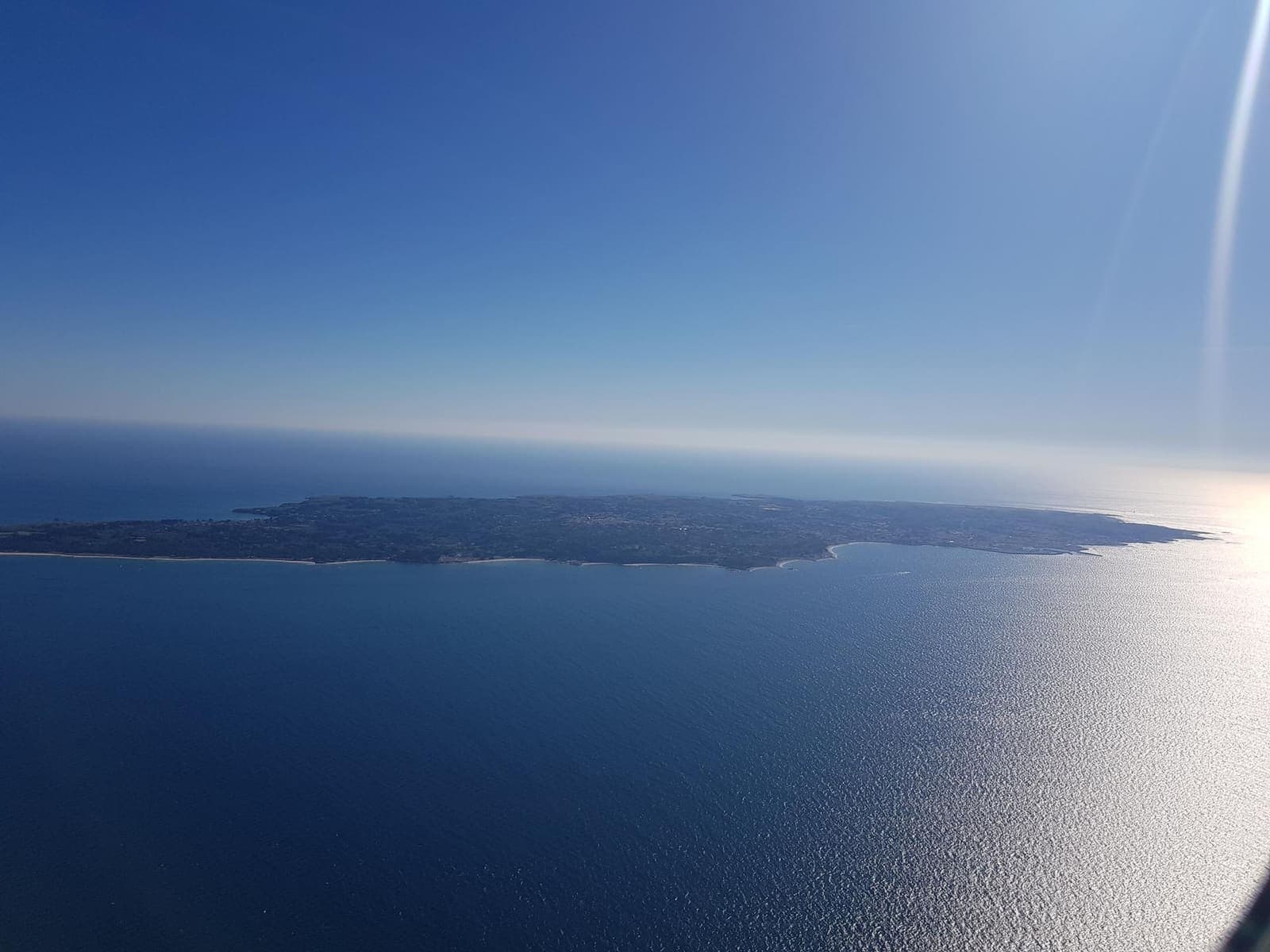
The glide out over the Atlantic is overwhelming. The sea is deep blue, water under both wings as far as the eye can see. To fly the correct arrival procedure I follow the island's northern coastline; the controller reports me as number three to land. Luckily there is enough height to slot in behind a Mooney flying an enormous circuit. The final approach over the beach is simply spectacular.
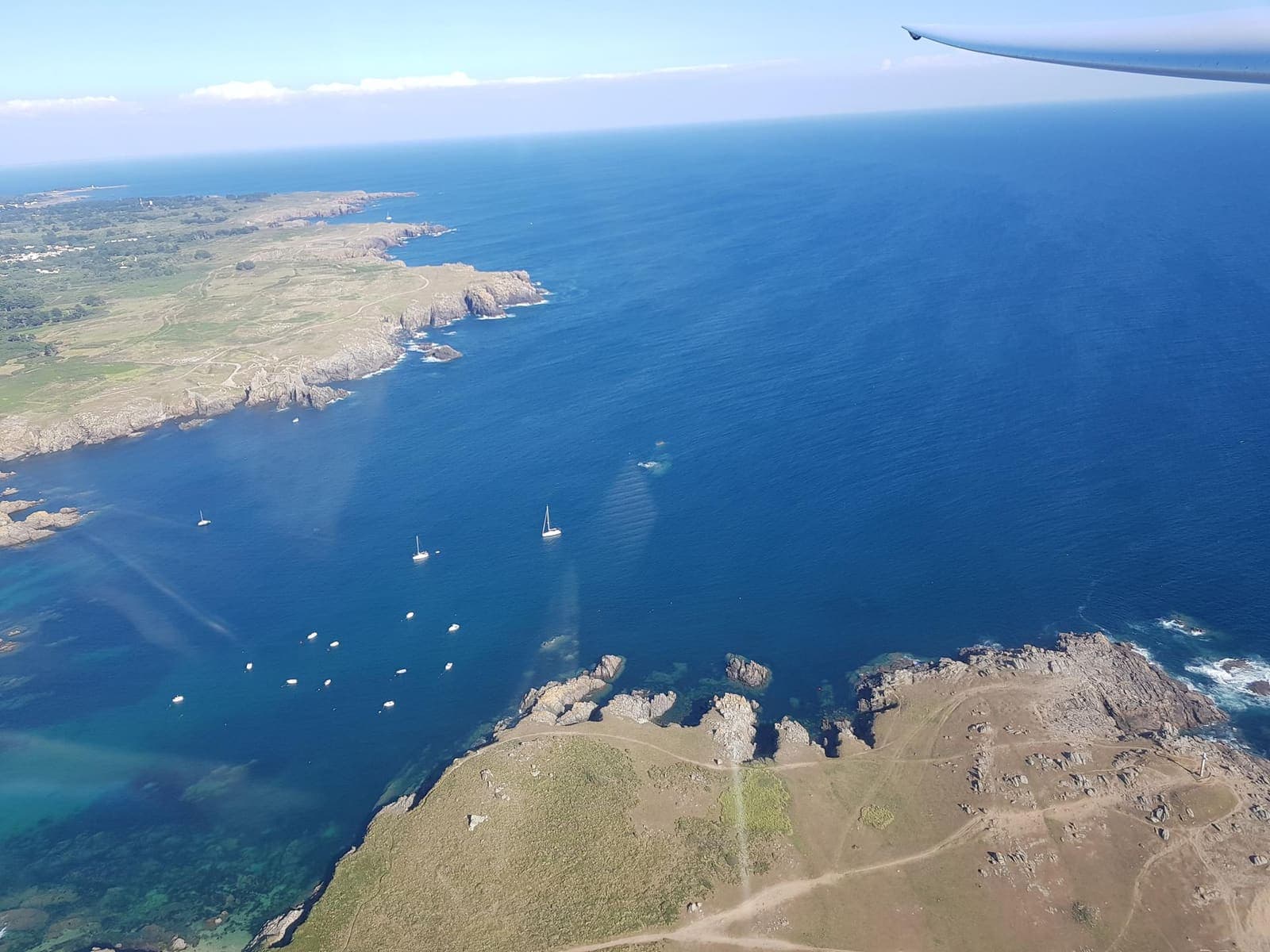
Island mode
After landing, the glider is tied down and the flip-flops are deployed. A rented bicycle gets me to my room, five kilometres outside Port-Joinville. There is enough daylight left for a long swim and an evening at the beach — followed by a fine dinner at the harbour. I float on cloud nine all evening and can hardly believe, right up to falling asleep, that I have landed on this dream island.
The surprise on departure
On Saturday the DG-400 has one more surprise in store: at around 500 metres the engine quits. Attempts with the starter and windmilling stay unsuccessful, and a quarter of an hour after take-off I am back on the island. Rather unpleasant. A few kind pilots on the ground help with the diagnosis — the generator fuse has failed — and 45 minutes later the next take-off works. This time the engine carries me to the thermals over the mainland.
I would happily have skipped the technical trouble. But I am overjoyed to have lived this adventure — and I am already looking forward to the next crazy flights.
This story first appeared in the magazine "segelfliegen" (1/2022) as "Reif für die Insel" — the original is linked below.